All Artforms

Bhil

Painted by the Bhil communities of Central and Western India, in dotwork descended from the sacred Pithora wall tradition.

Bhil painting

An introduction

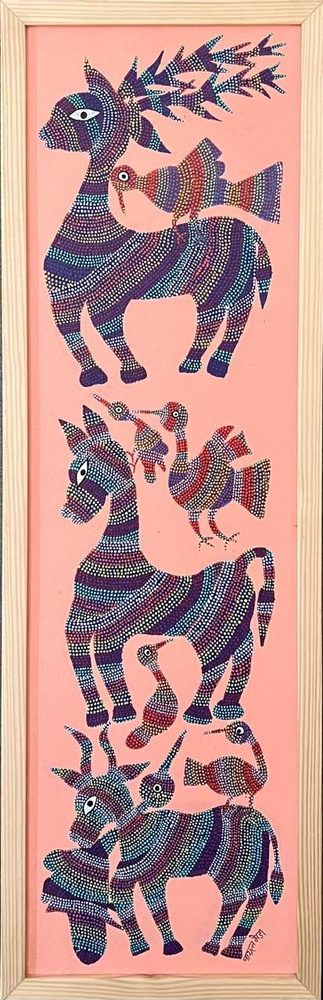
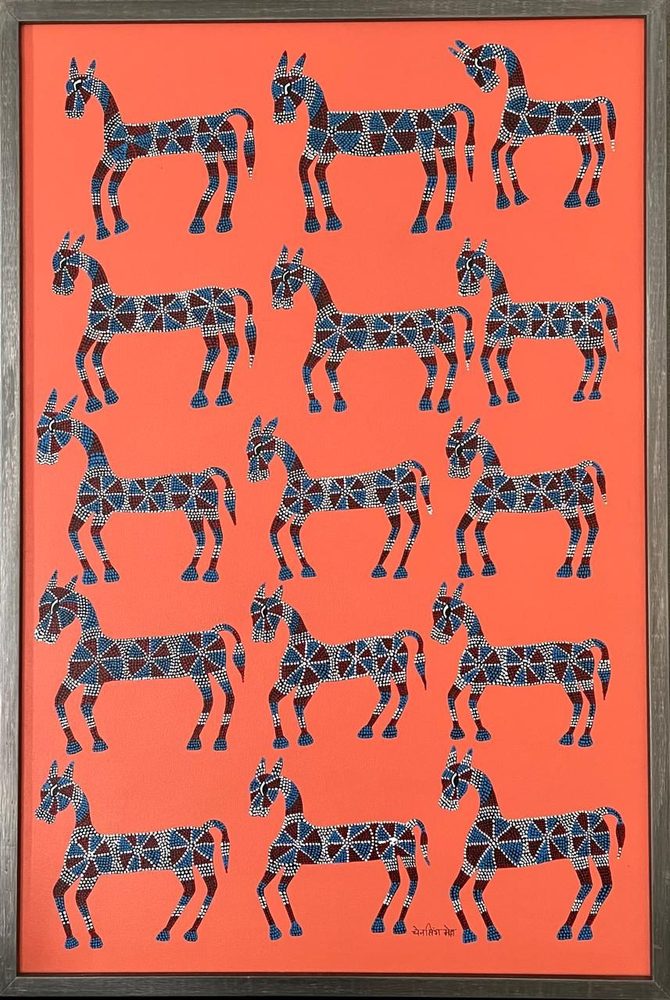
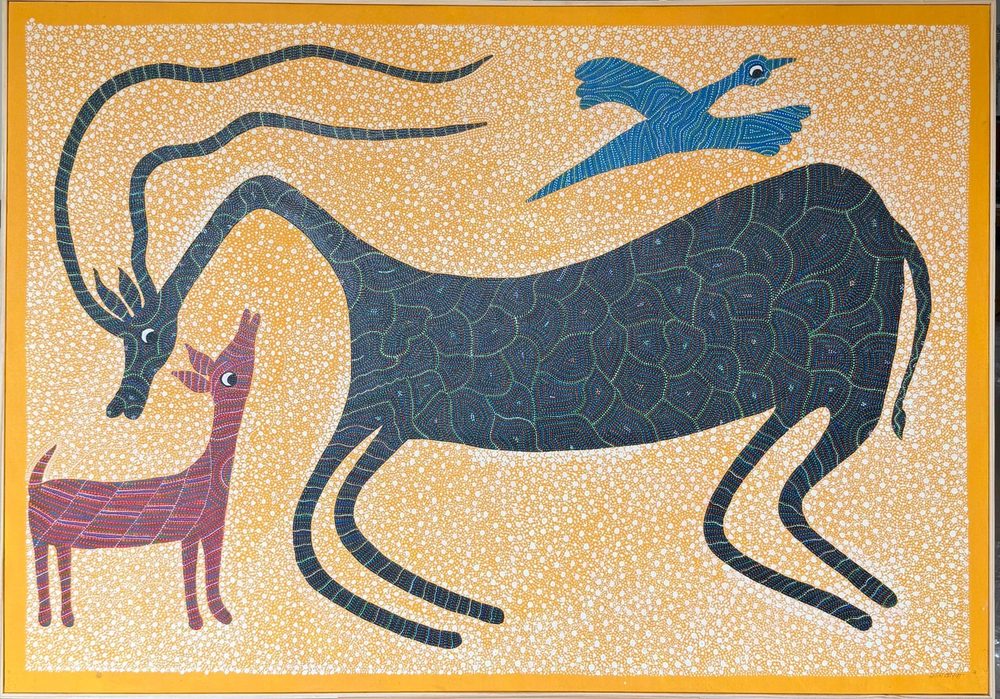
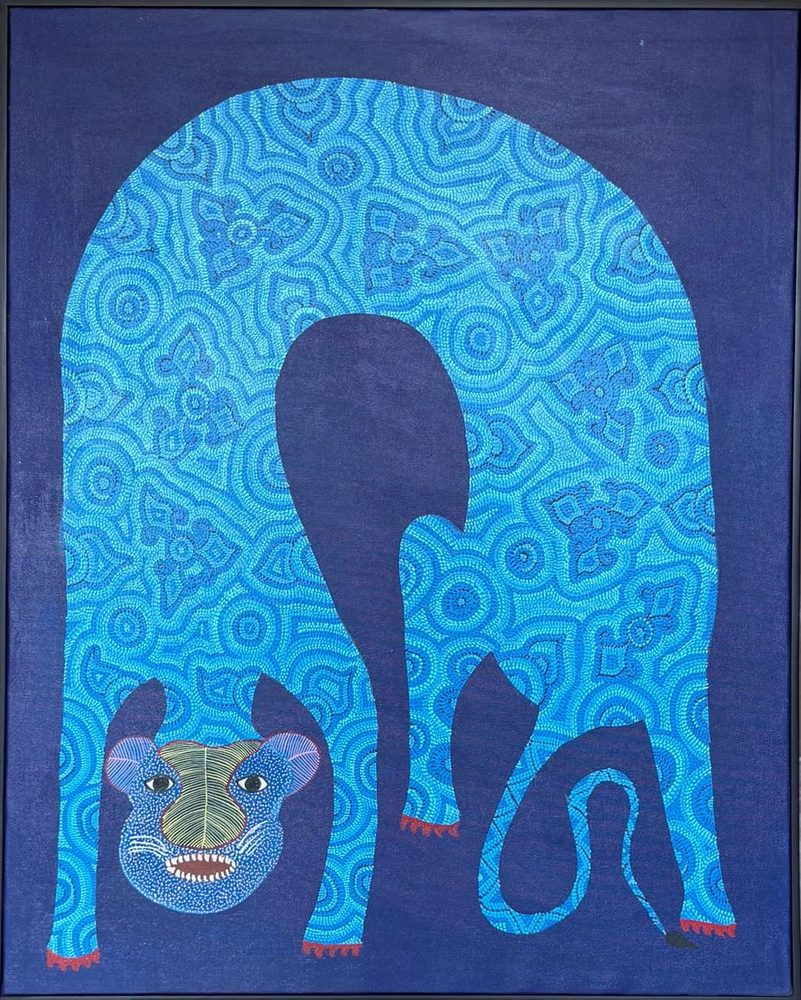
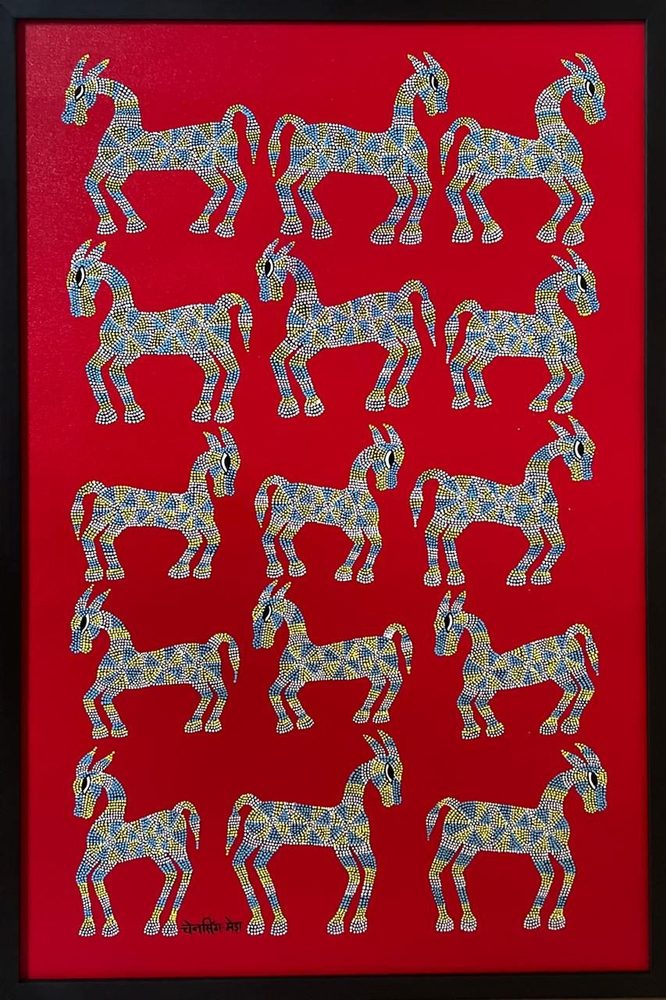
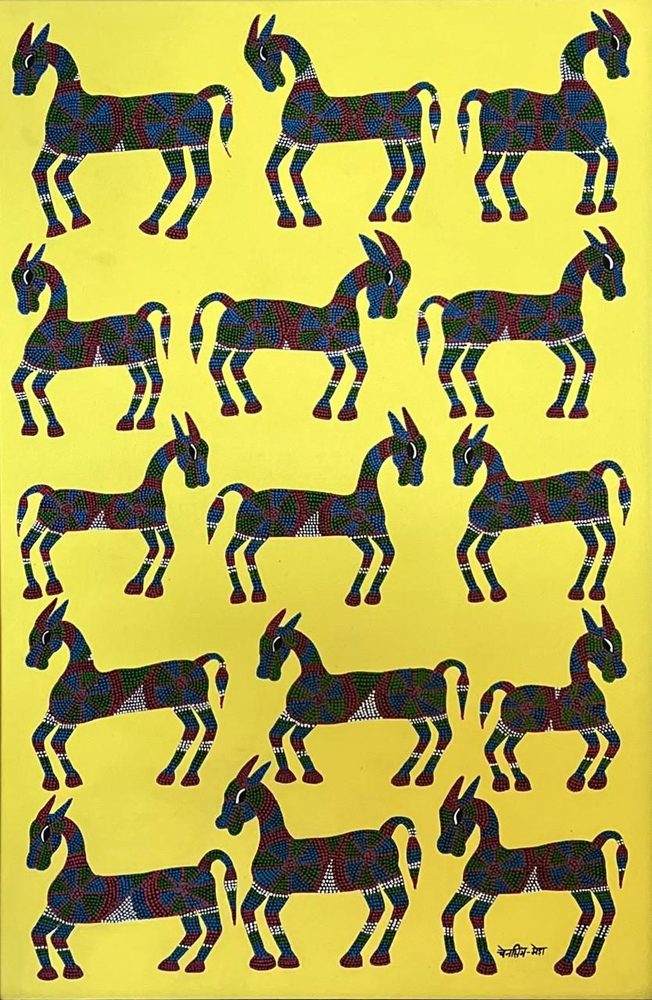
A Bhil painting is built dot by dot, thousands of them placed by hand, gathering into animals, ancestors and scenes of village life. The dots are more than technique: many are laid down in remembrance of ancestors, so the finished surface shimmers with meaning as much as colour.
Region
MP, Rajasthan, Gujarat, Maharashtra
Materials
Natural pigments & acrylic
Signature
Rhythmic multicoloured dotwork
Themes
Legend, ancestors, wildlife, village life
Bhil artwork

History & origins

The Bhil are among India’s oldest and largest tribal communities. Their painting grew out of Pithora — sacred wall paintings made by Badvas, priest-painters, to honour deities and mark harvests, weddings and vows fulfilled.

Bhil detail

Materials & technique

Compositions are dabbed on entirely in dots — rhythmic, multicoloured fields that fill and animate every figure. Earth pigments came first; most artists today use acrylic, and the rhythm is unchanged.

Cultural significance

The dotted fields carry gods, ancestors, wildlife and village life, and the act of painting is itself understood as an offering — each dot a mark of remembrance.

Modern-day relevance

Artists such as Bhuri Bai carried Bhil painting from mud walls to canvas and national recognition, opening the tradition to new audiences with its ritual heart intact.

Representative Bhil works

Bhil paintings currently with us. Tap any work to view it larger and enquire.

Enquire about a work

Gond All Art Forms Pichwai