All Artforms

Gond

The painting tradition of the Gond community of Madhya Pradesh — from ritual wall patterns to canvases collected worldwide since the 1980s.

Gond painting

An introduction

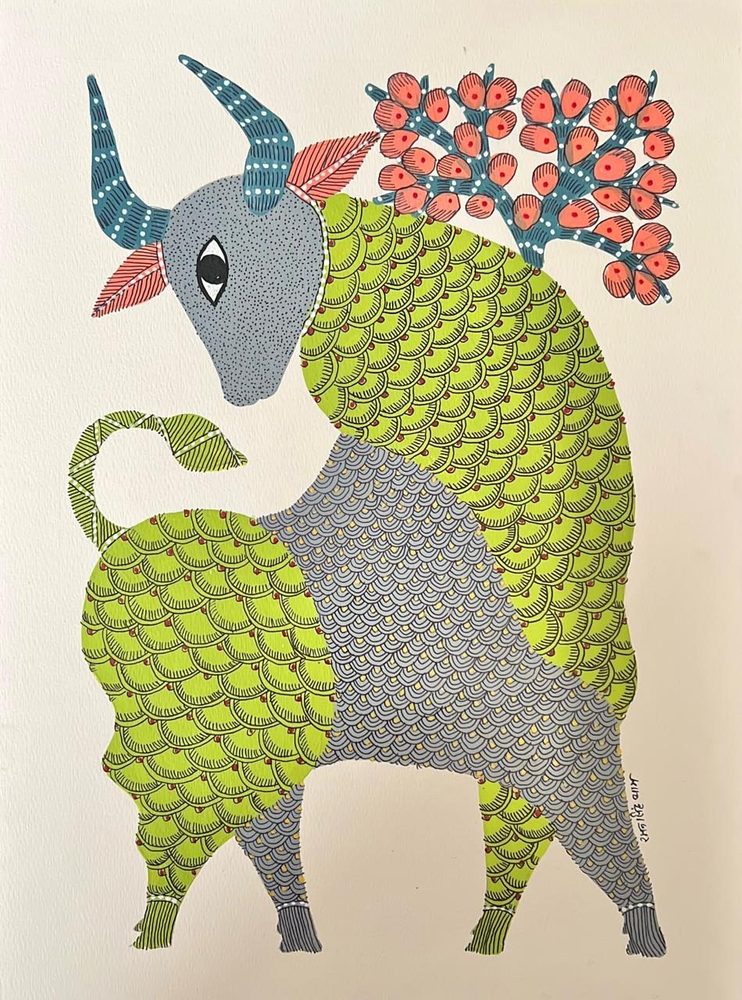
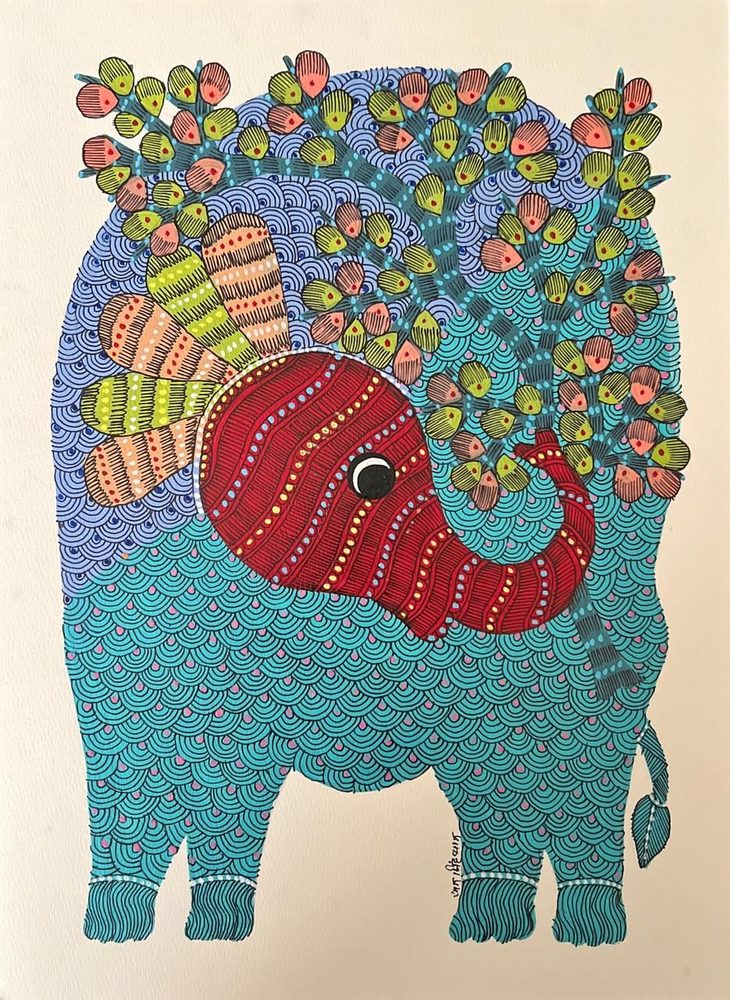
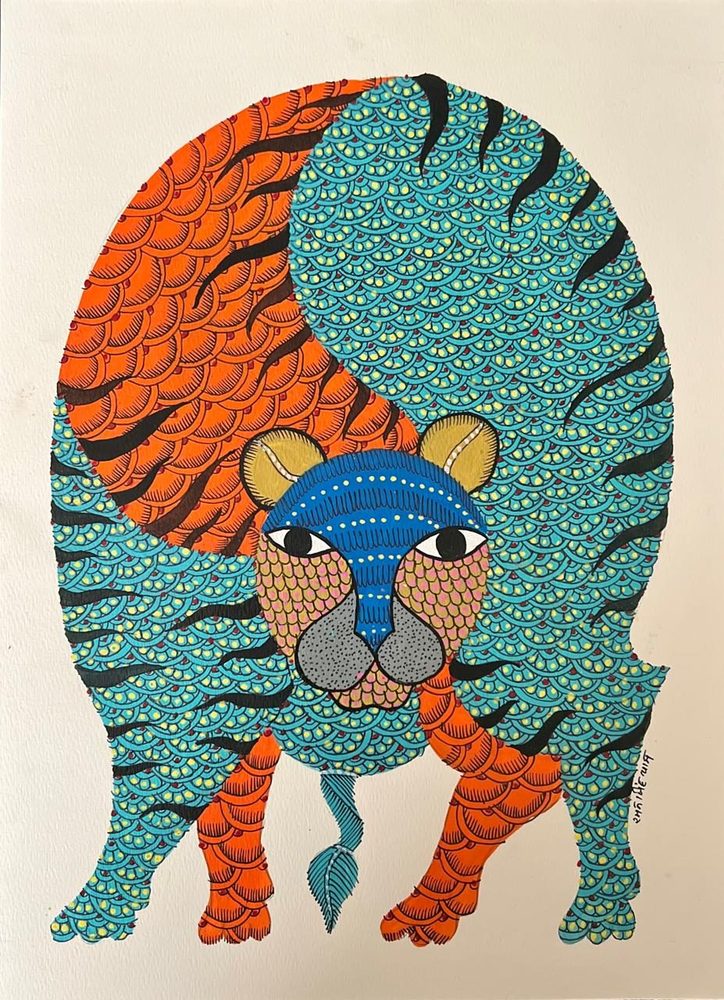
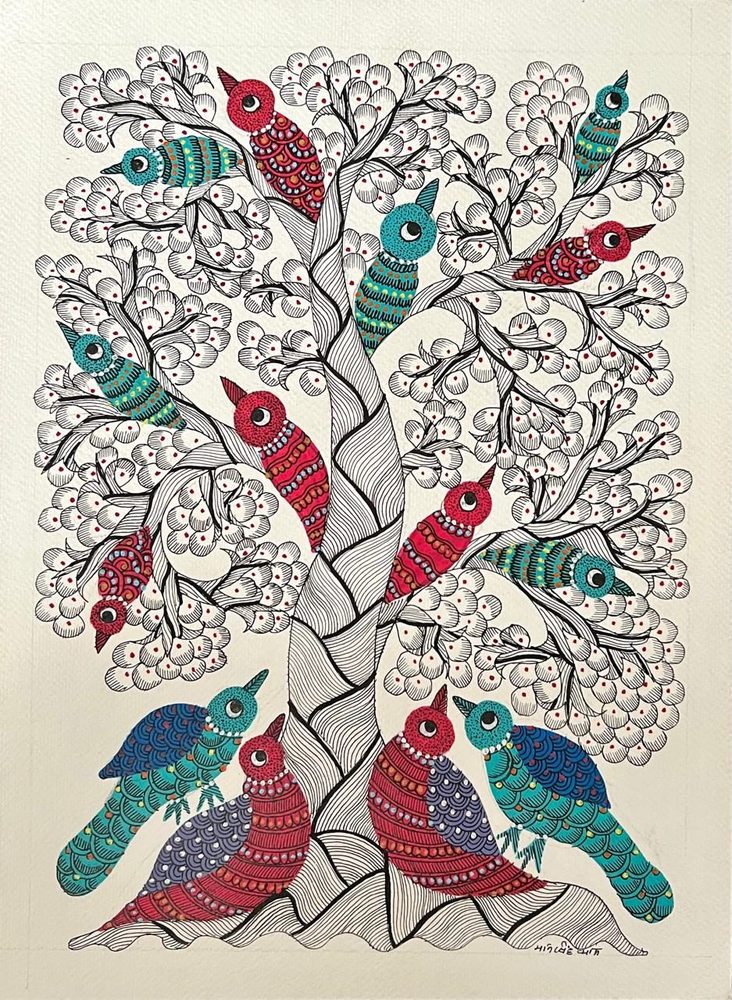
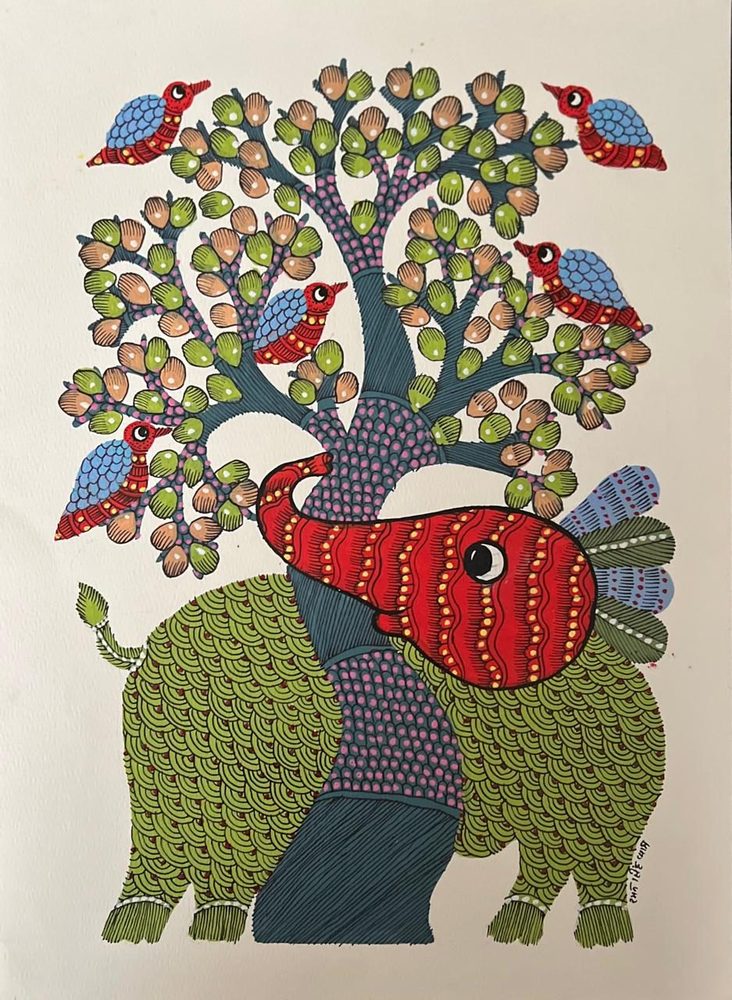
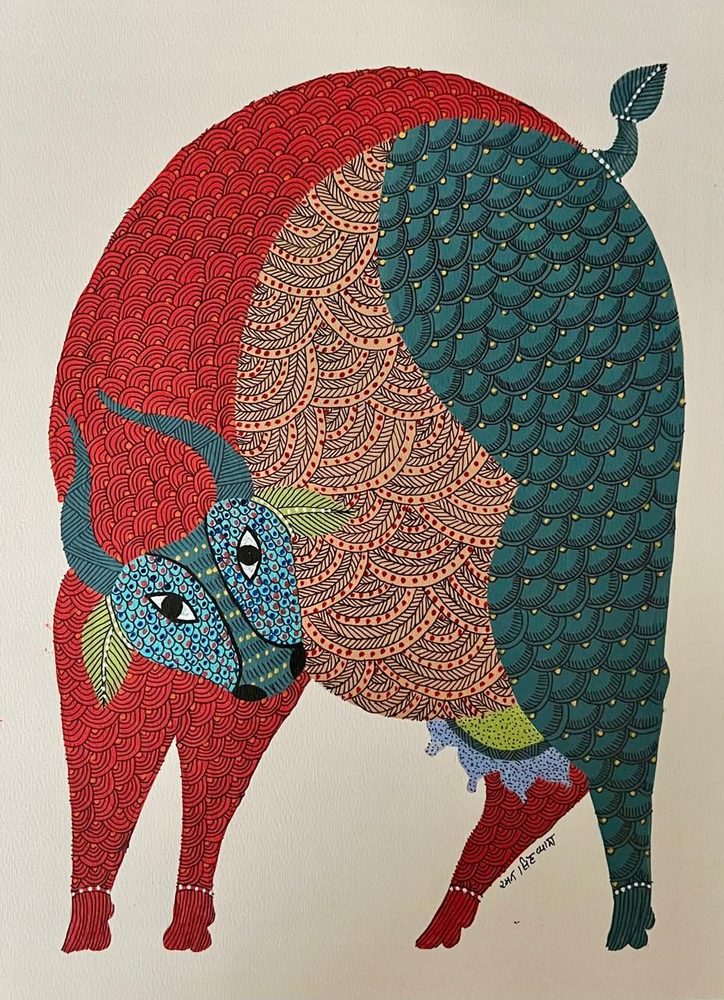
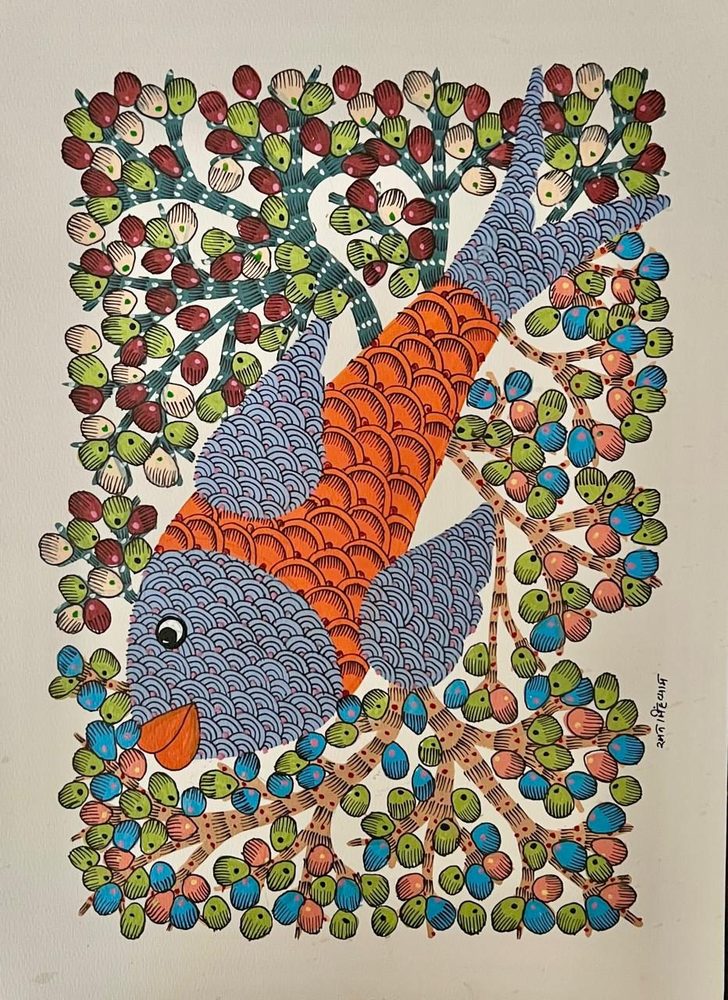
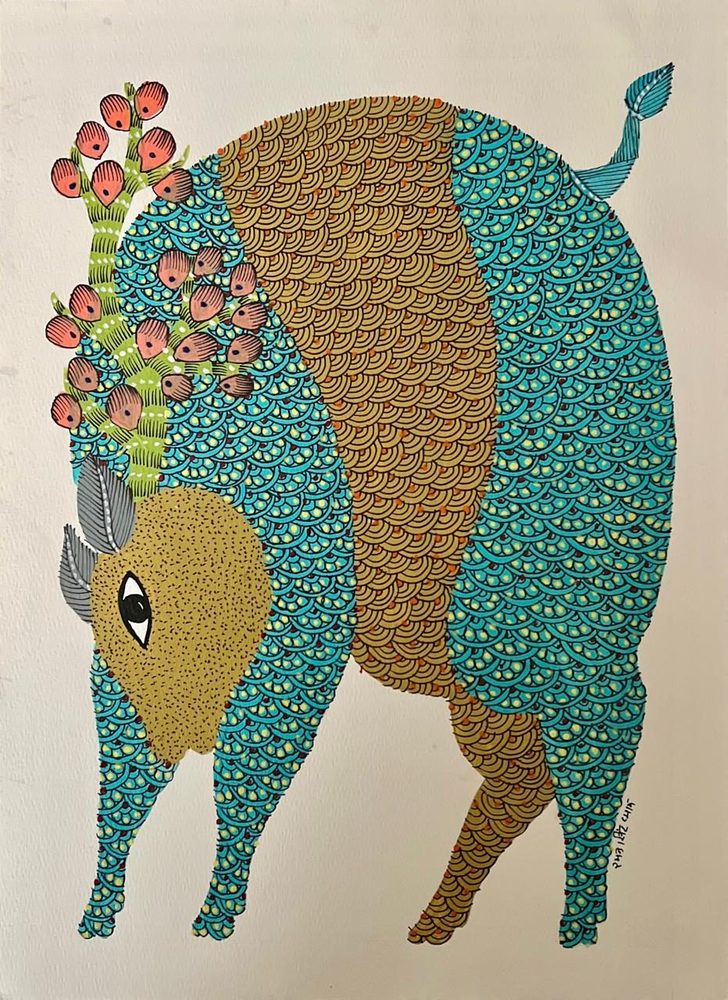
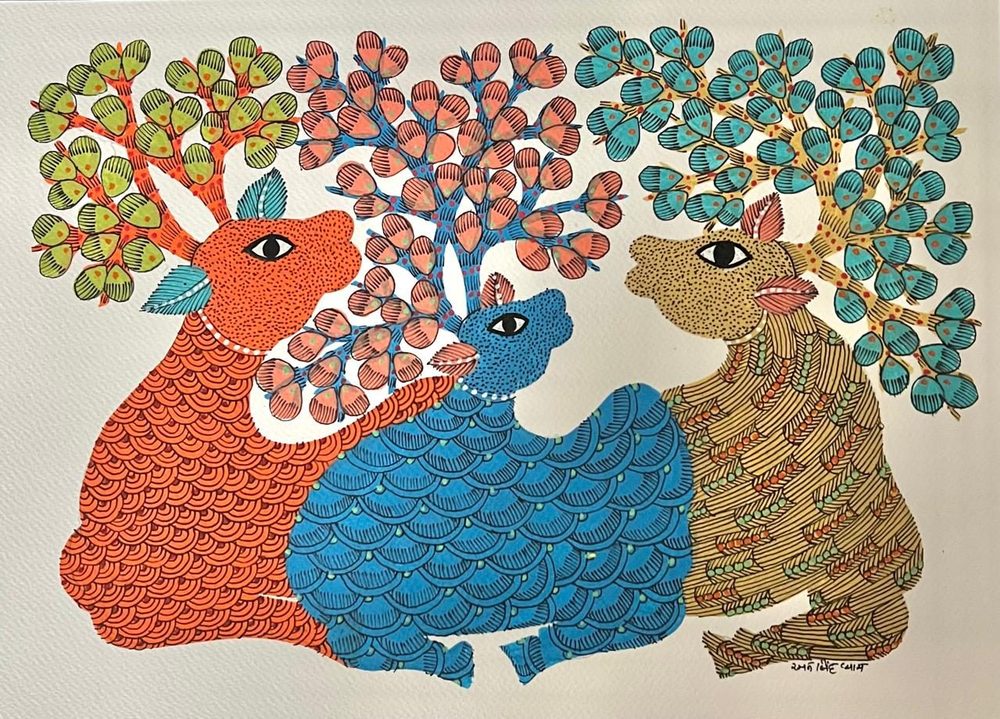
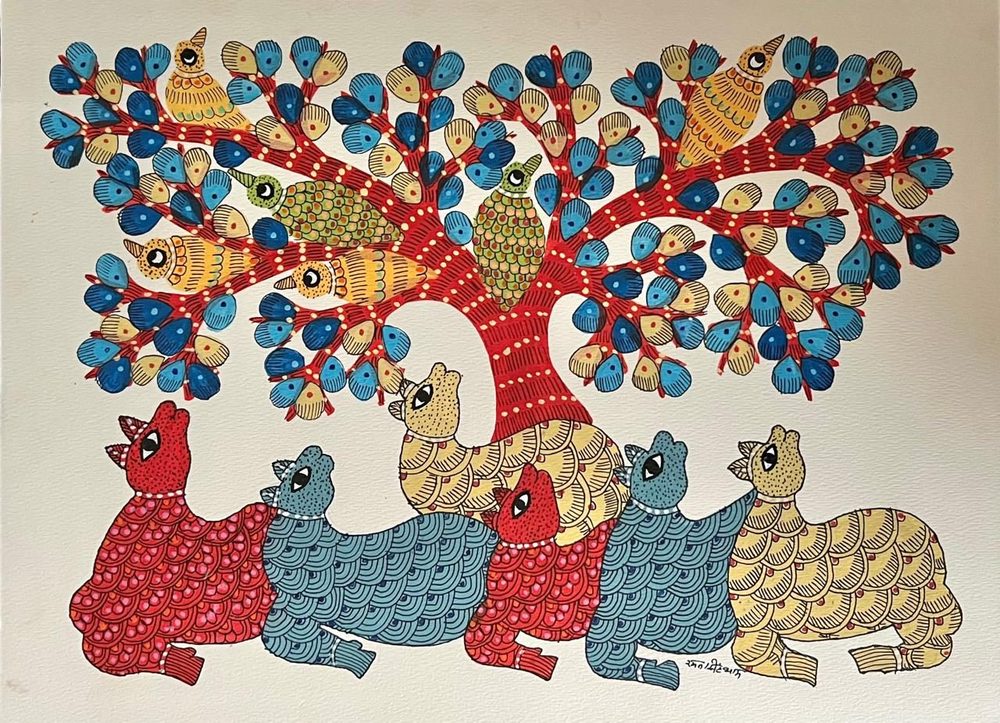
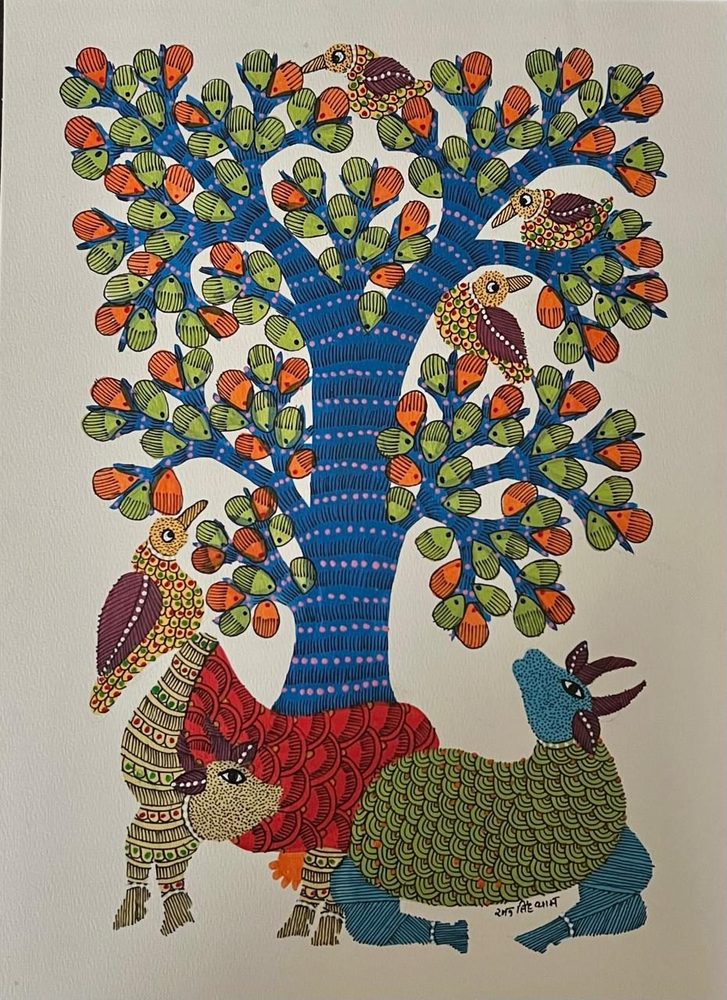
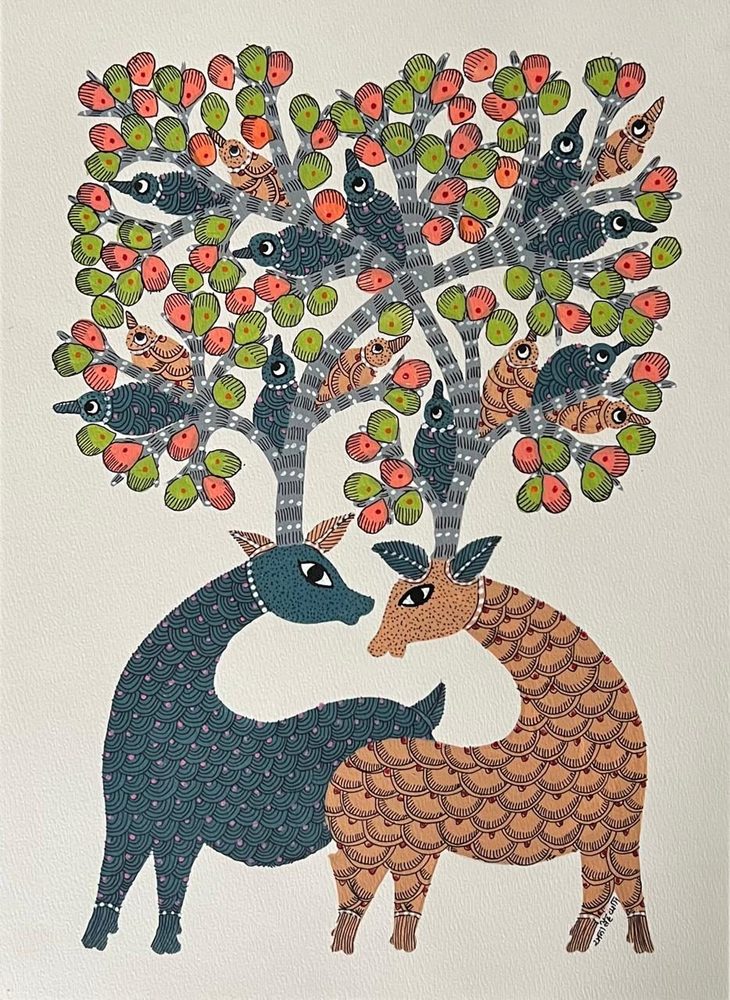
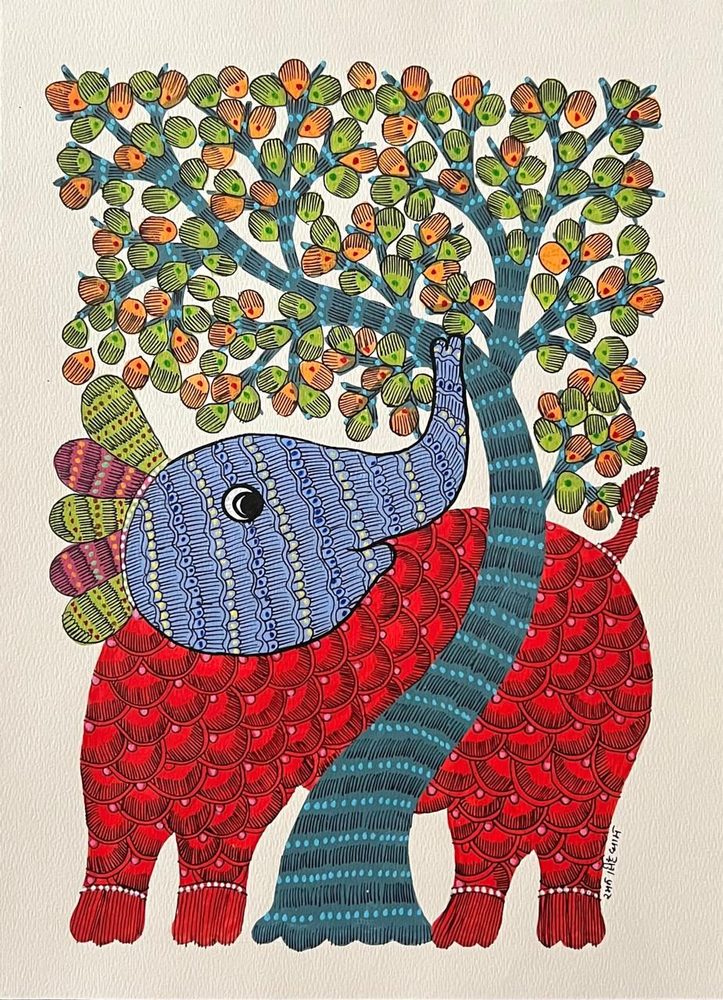
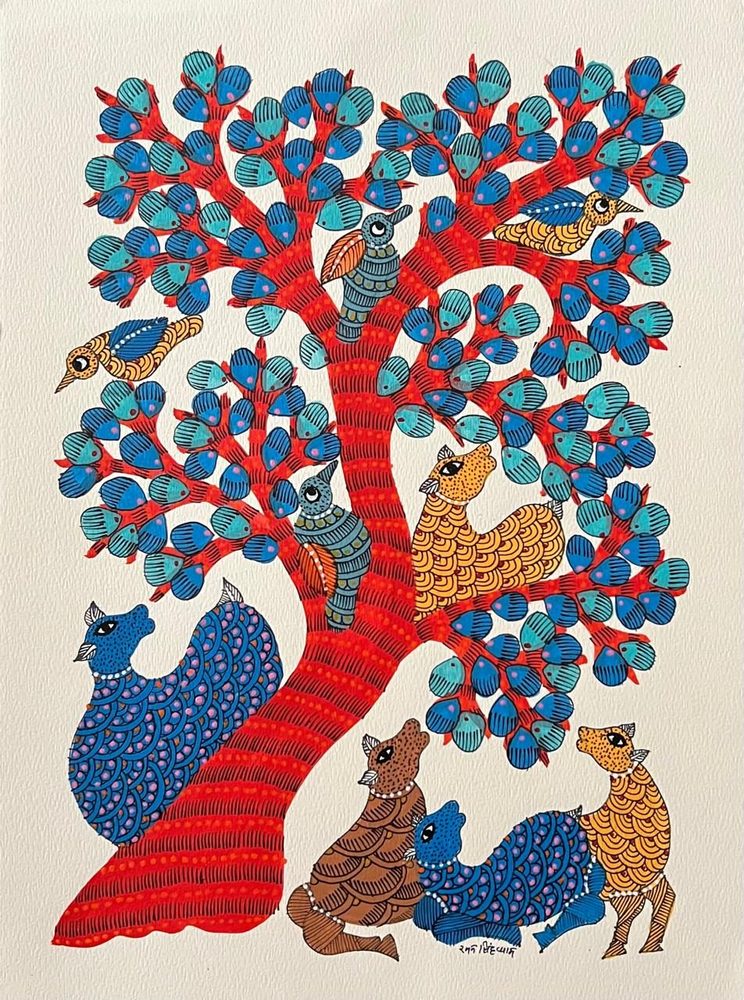
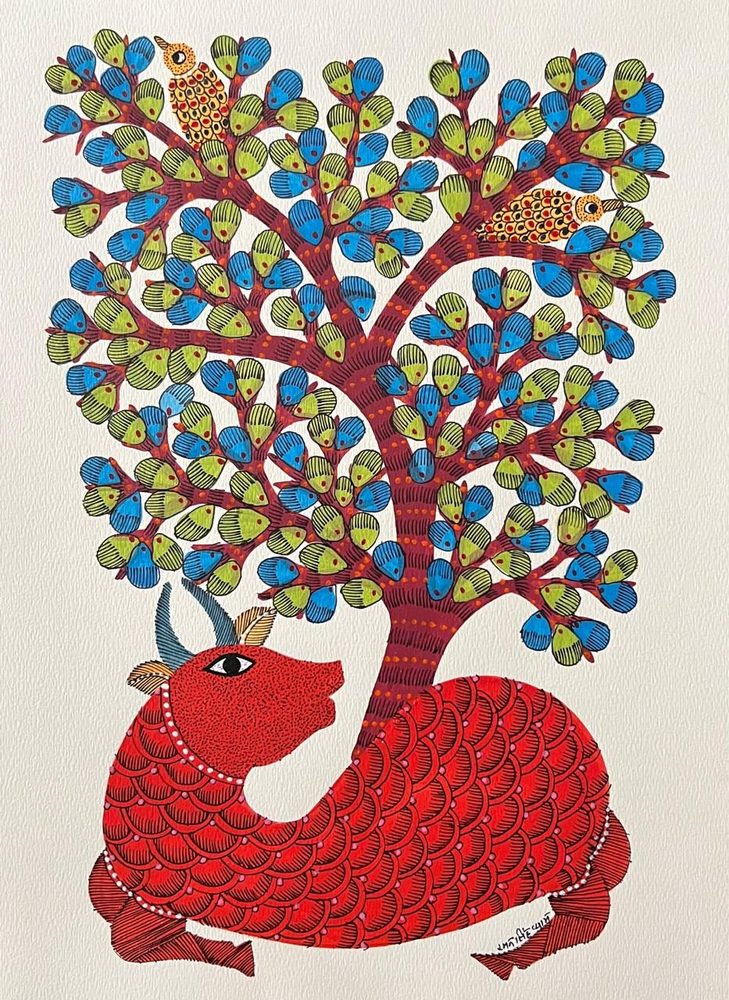
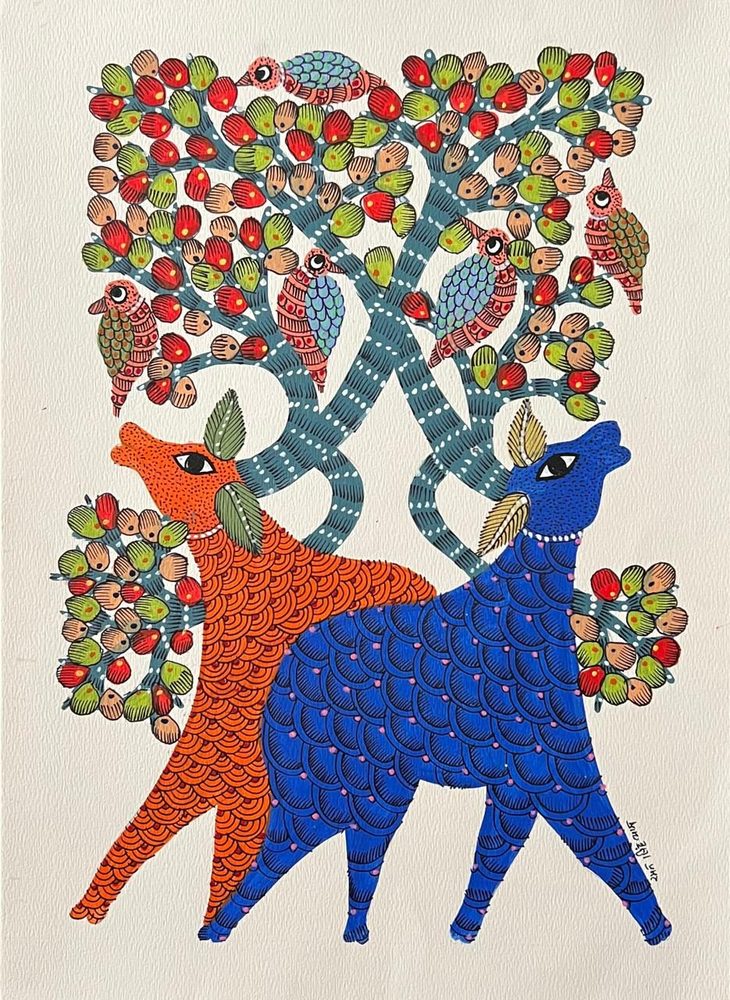
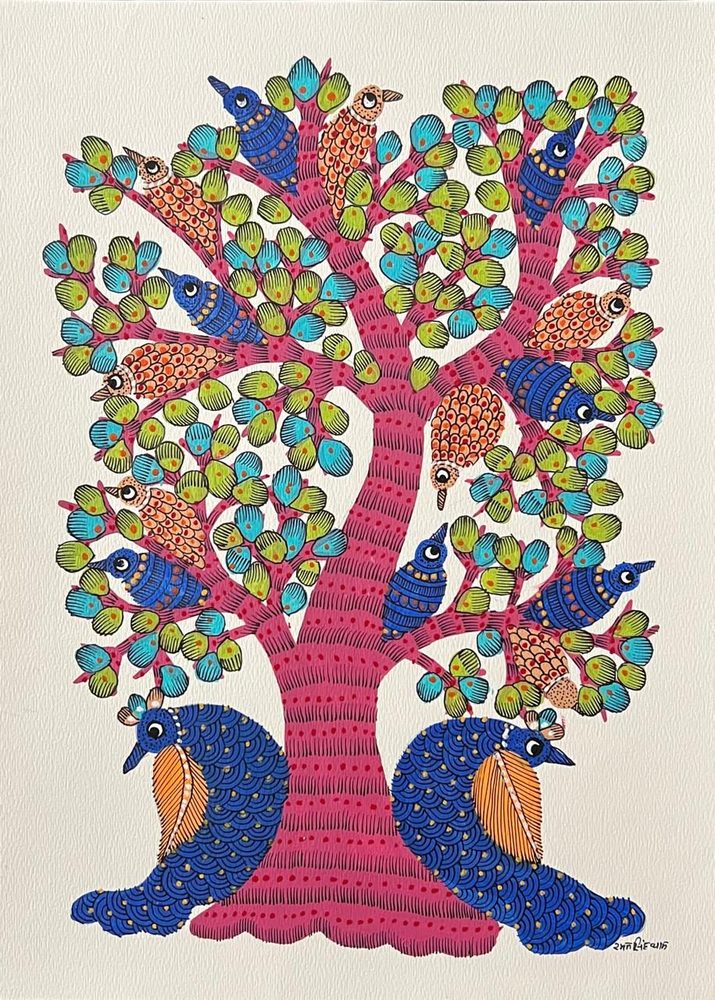
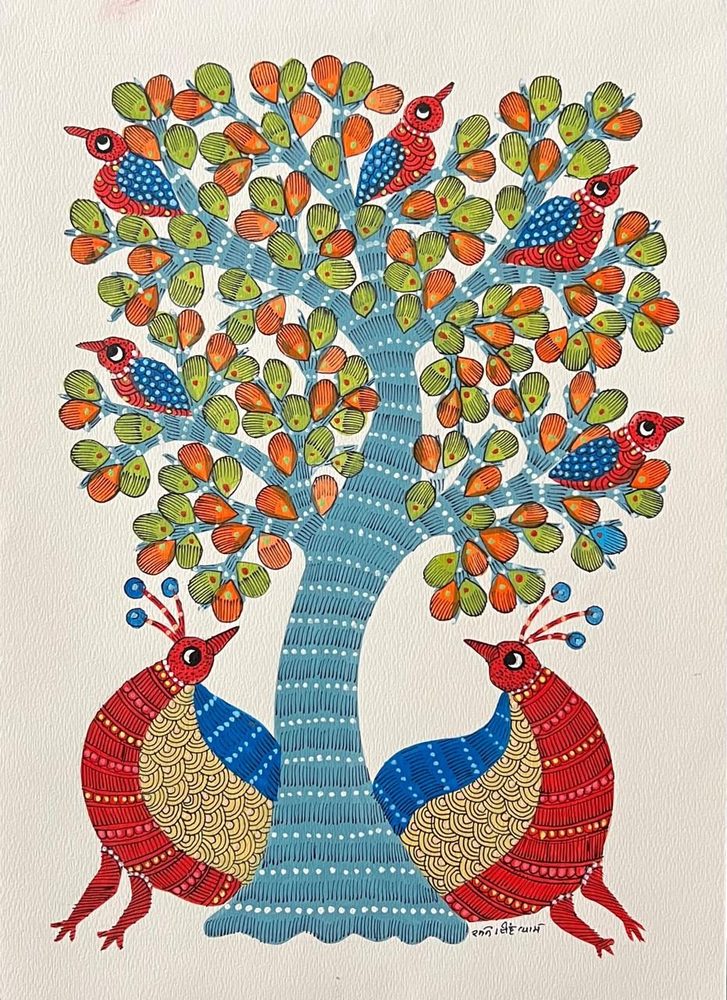
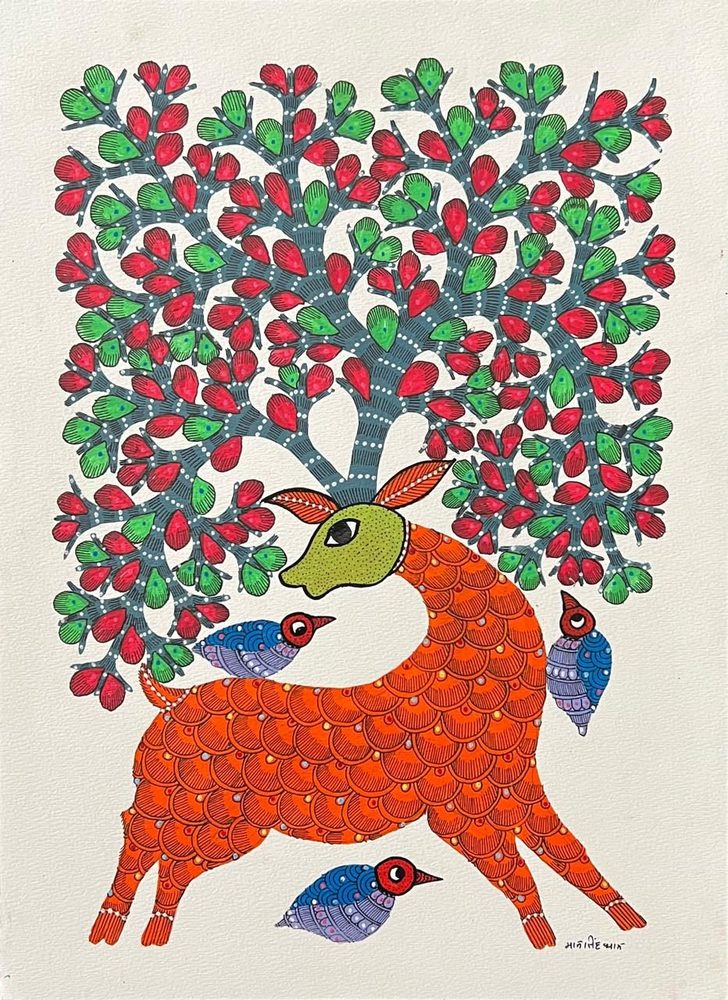
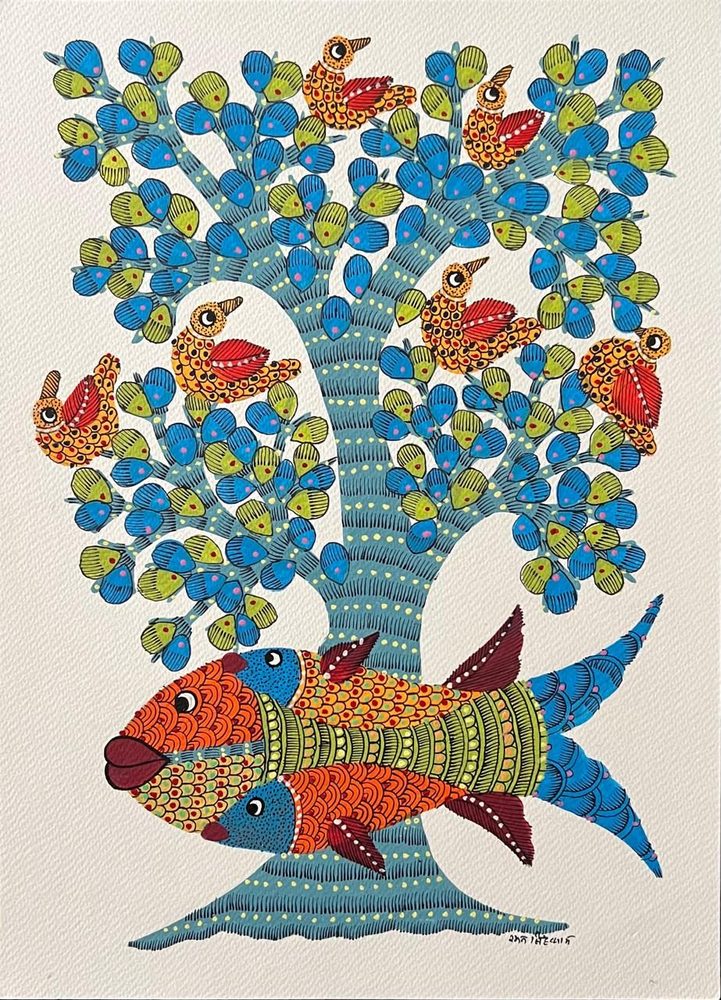
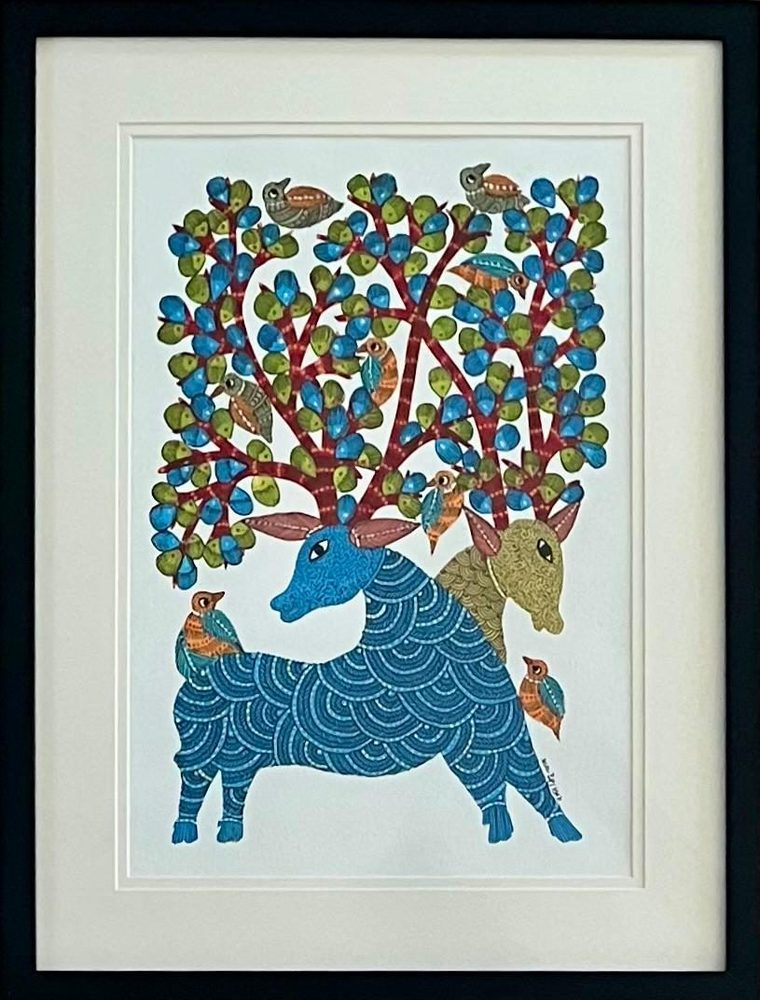
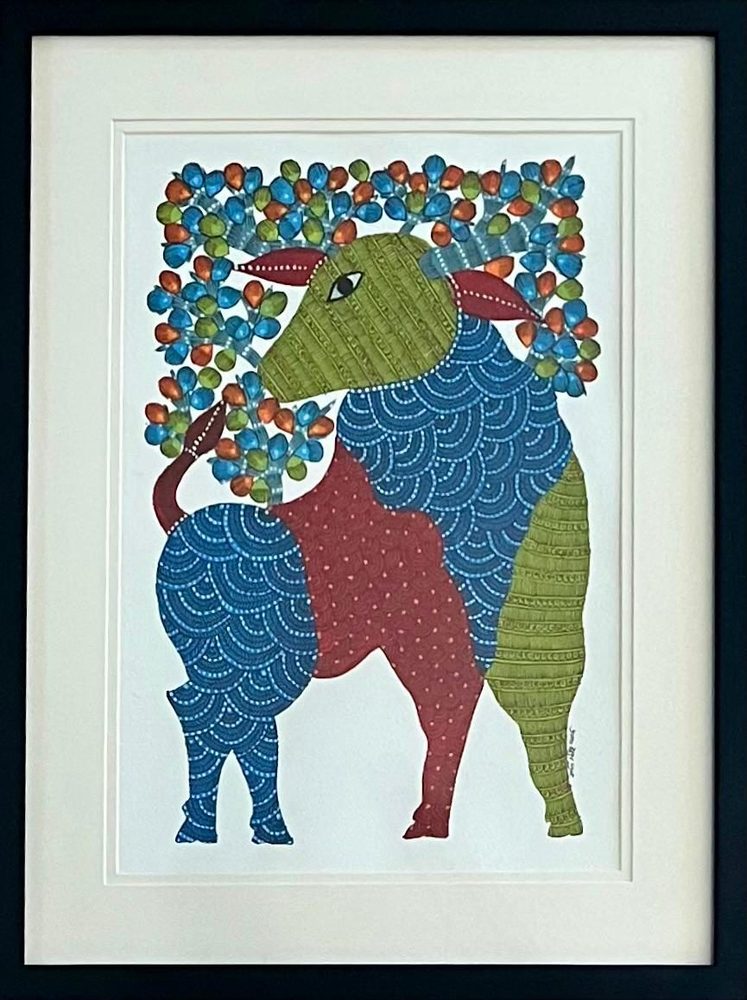
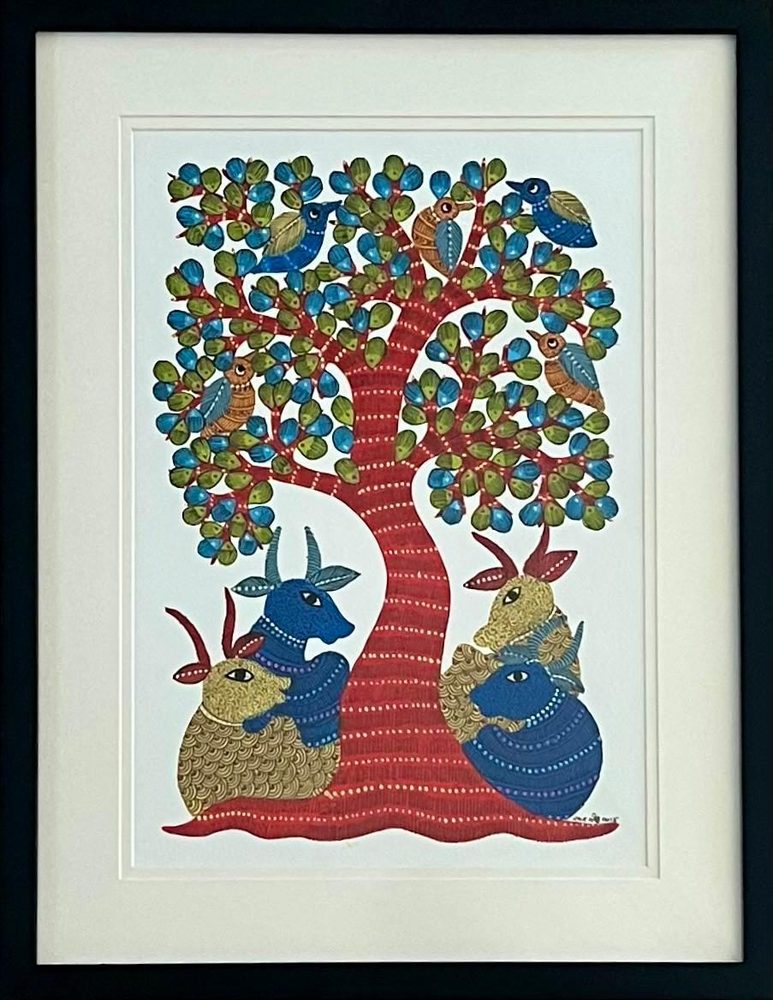
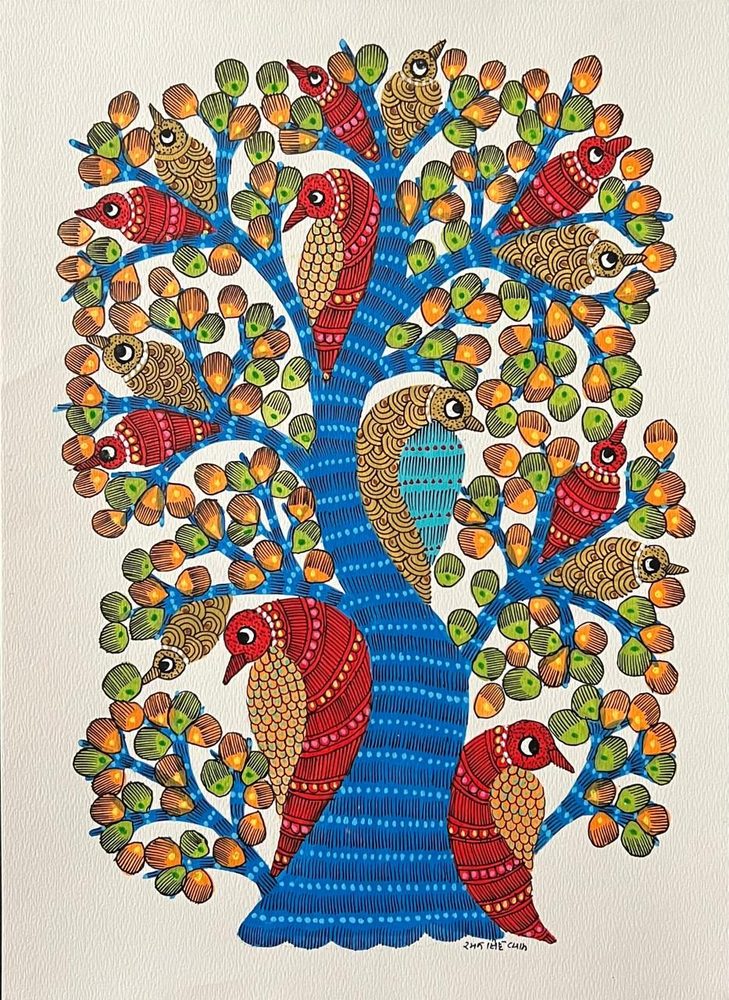
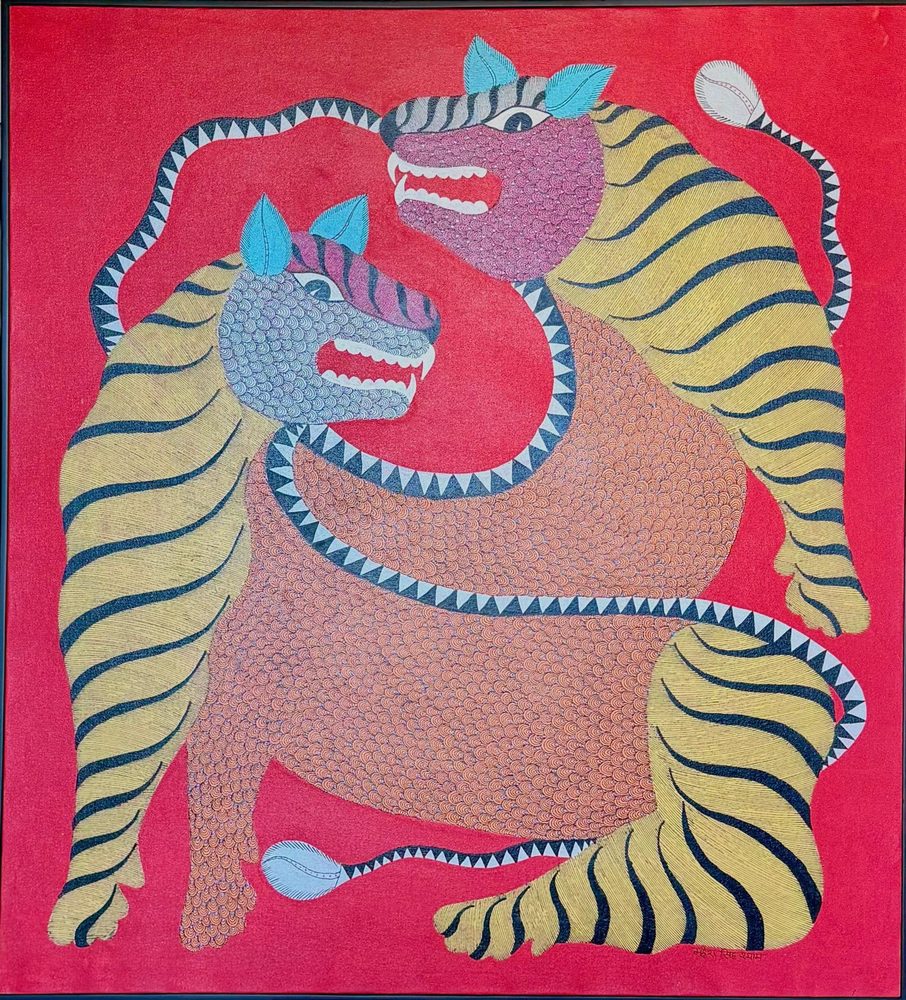
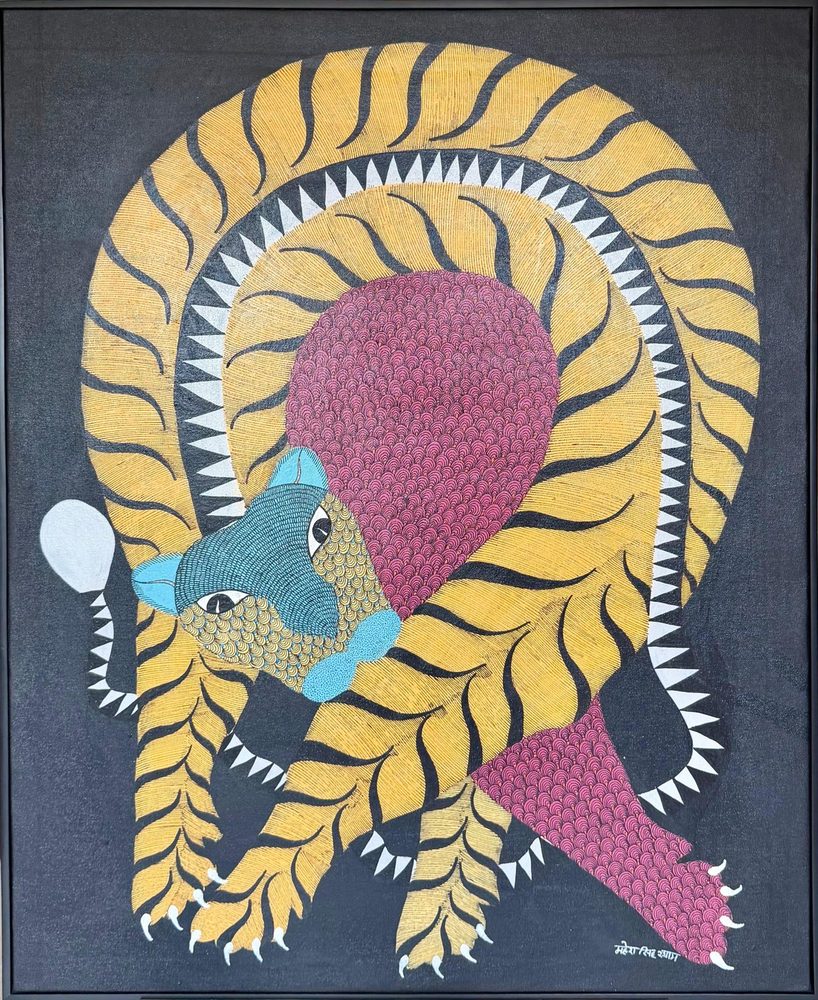
Gond painting turns the living world into pattern: animals, trees and rivers built from rhythmic dots and dashes until the surface itself seems to move. Each work retells something — a song, a folk tale, a spirit of the forest — in a worldview where everything in nature is alive.
Region
Madhya Pradesh
Materials
Ink & acrylic on paper, canvas
Signature
Dots, dashes & fine infill
Themes
Nature, animals, folk tales
Gond artwork

History & origins

The Gond are one of India’s largest Adivasi communities, spread across the forests of Central India. Painting began at home, as digna — geometric patterns drawn on floors and walls for festivals and seasons. In the 1980s, Jangarh Singh Shyam carried the wall tradition onto paper and canvas; his style, now called Jangarh Kalam, took Gond art from his village to galleries around the world.

Gond detail

Materials & technique

Each form begins as an outline, then fills line by line with the artist’s signature infill — dots, dashes, commas, fish-scales — until the surface vibrates. The colours once came from the land: charcoal, coloured soil, plant sap and leaves. Most artists now work in ink and acrylic, with the same vocabulary intact.

Cultural significance

In the Gond worldview, every animal, tree and river holds a spirit. A painting retells a song, a tale or a deity — and seeing a good image is believed to bring good fortune.

Modern-day relevance

Gond is now among India’s most collected folk forms, shown from Bhopal to Paris, and still painted by the same families and villages — an unbroken line from wall to canvas.

Representative Gond works

Gond paintings currently with us. Tap any work to view it larger and enquire.

Enquire about a work

Warli All Art Forms Bhil